Emerging Technologies in Motor Rehabilitation in 2026

shares

The future of healthcare lies at the intersection of technology, innovation, and patient-centric care.

Motor rehabilitation is changing faster than ever. What used to be limited to repetitive exercises and standardized therapy plans is now becoming intelligent, adaptive, and deeply personalized.
In 2026, emerging technologies in motor rehabilitation are not just supporting therapy. They are actively reshaping how recovery happens.
At NeuroReVive, we are seeing this transformation firsthand. From brain computer interface rehabilitation systems to AI-driven therapy and soft robotics, innovation is opening new possibilities for patients recovering from stroke, spinal cord injuries, or peripheral nerve damage.
Here is what is shaping the future.

Brain Computer Interface Rehabilitation Is Becoming Practical

Brain Computer Interface, or BCI, is no longer a futuristic concept. It is becoming a powerful clinical tool.
BCI technology detects neural signals linked to movement intention and translates them into action. For someone working toward hand recovery after stroke, this means that even if the hand cannot move independently, the brain’s intention can still be captured and used.
This is important because recovery is not only about muscles. It is about reconnecting the brain to movement.
Brain computer interface rehabilitation systems help:
When therapy is guided by actual neural signals rather than passive movement, engagement and recovery potential increase significantly.
For us, this is one of the most exciting areas in neurotechnology in rehabilitation.

Artificial Intelligence Is Making Therapy Smarter

Artificial intelligence is transforming rehabilitation from fixed protocols into dynamic systems.
Instead of using the same exercises for everyone, AI can:
For patients focused on hand recovery after stroke, this means therapy evolves with them. It adjusts as strength, coordination, and neural activation improve.
At NeuroReVive, we believe intelligent adaptation is essential. Recovery should respond to the patient, not the other way around.

Soft Robotics Are Making Movement More Natural

Robotic rehabilitation used to mean heavy, rigid systems. That is changing.
Soft robotics and lightweight exoskeletons now allow more natural motion and greater comfort. Flexible materials support movement without forcing it. This improves patient confidence and increases therapy adherence.
When soft robotics are combined with brain computer interface rehabilitation systems, something powerful happens. Intention from the brain leads to assisted movement. Movement reinforces neural pathways. The brain learns again.
That closed loop between intention and execution is where meaningful recovery begins.

Real Time Data Is Improving Clinical Decisions
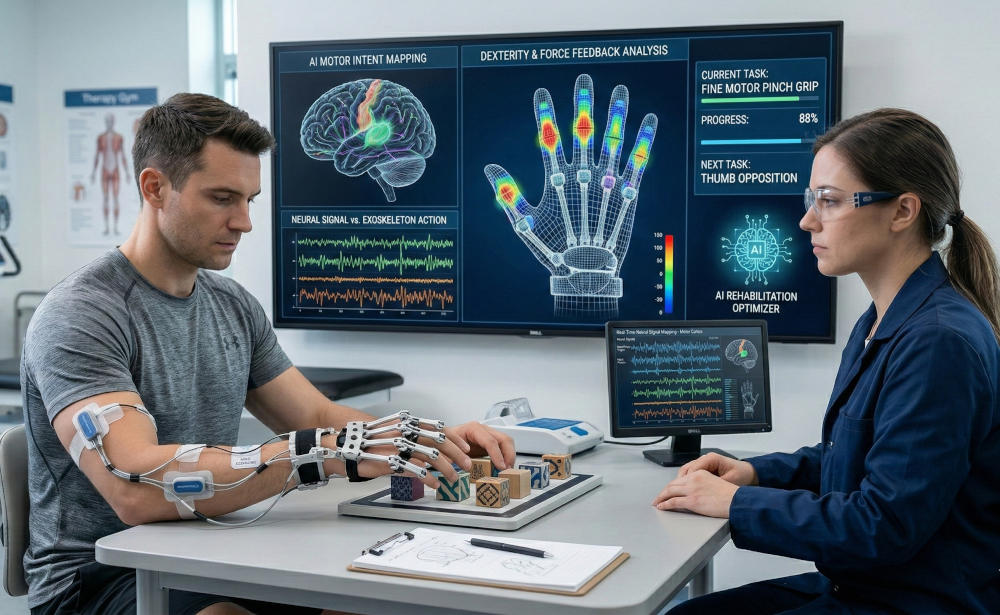
Another major shift in neurotechnology in rehabilitation is data transparency.
Modern systems can track:
For therapists, this means clearer insight into what is working. For patients, it means visible progress and motivation.
Secure infrastructure also ensures that sensitive health data remains protected while enabling remote monitoring and long term tracking.
Recovery becomes measurable, structured, and evidence driven.

Integration Is the Real Breakthrough

The real innovation in 2026 is not one single device, it is the integration of brain computer interface rehabilitation, artificial intelligence, soft robotics, and real time monitoring into one connected system.
This is where we see the future of emerging technologies in motor rehabilitation. Not isolated tools, but intelligent ecosystems that support patients holistically.
At NeuroReVive, this integrated approach is at the core of what we are building. Our mission is simple. Restore hand function by reconnecting the brain to movement in a way that is adaptive, measurable, and human.

Emerging technologies in motor rehabilitation are giving us new ways to support hand recovery after stroke and other neurological conditions. And we are proud to be part of this shift.

We believe recovery should be intelligent. It should be personalized. And most importantly, it should give people their independence back.

And we are just getting started.
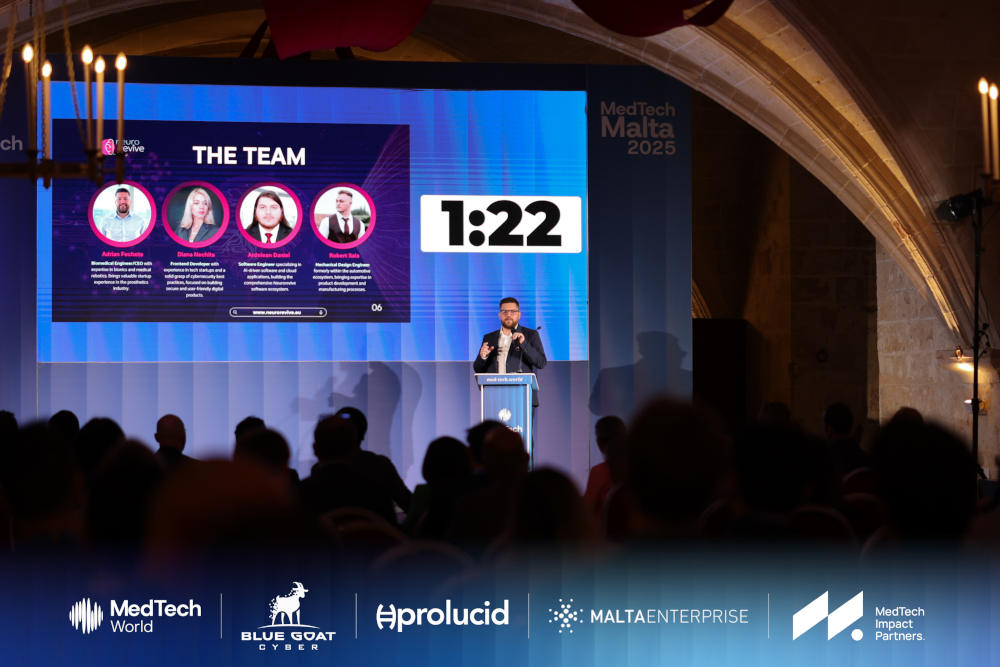
Emerging technologies in motor rehabilitation are giving us new ways to support hand recovery after stroke and other neurological conditions. And we are proud to be part of this shift.

We believe recovery should be intelligent. It should be personalized. And most importantly, it should give people their independence back.

And we are just getting started.
© 2025  Neurorevive All rights reserved.
Website created, secured and managed by Haipeweb

Request Our Investor Pitch Deck

Fill out the form and we’ll send you our investor materials shortly.
pitch deck